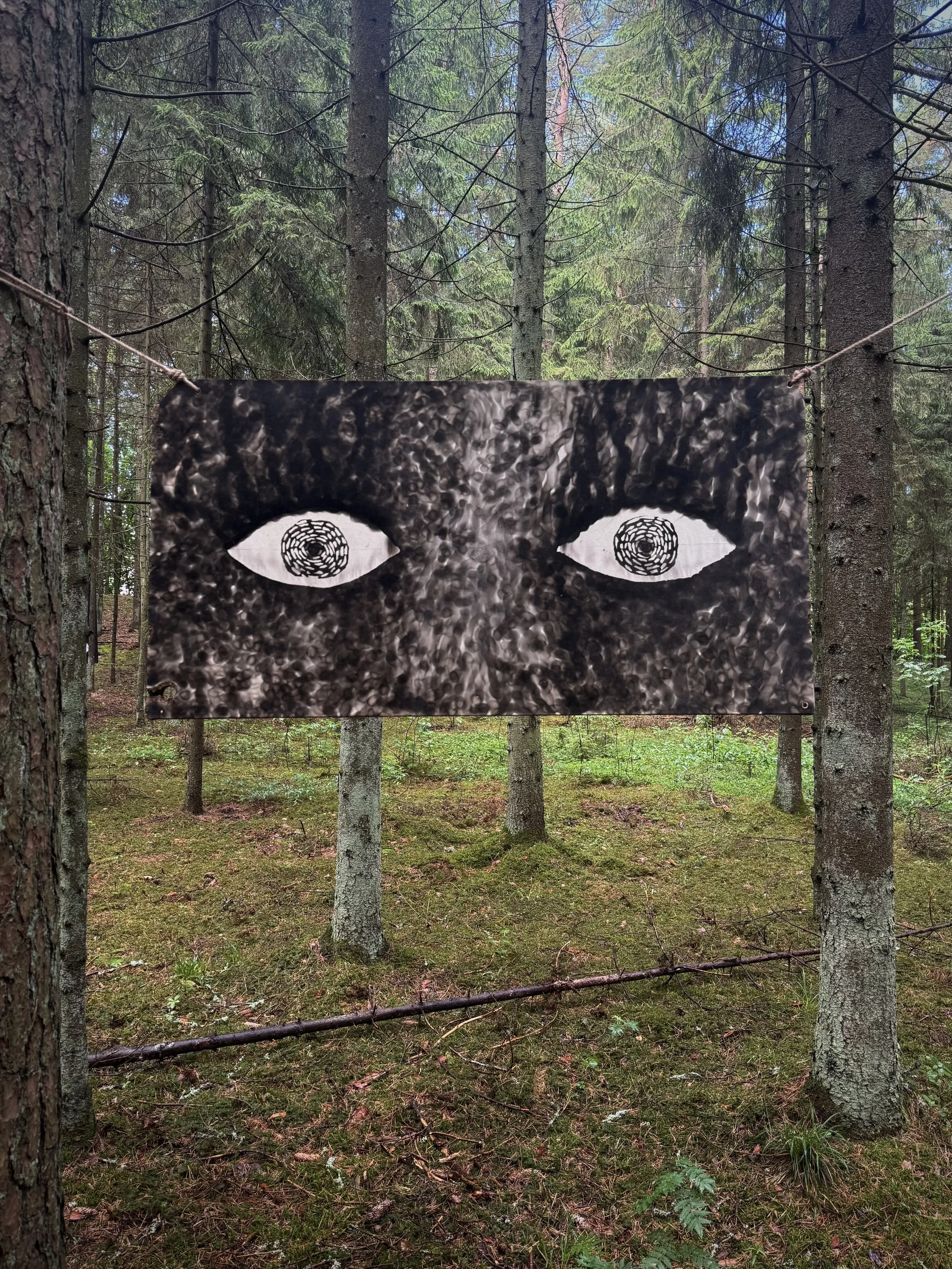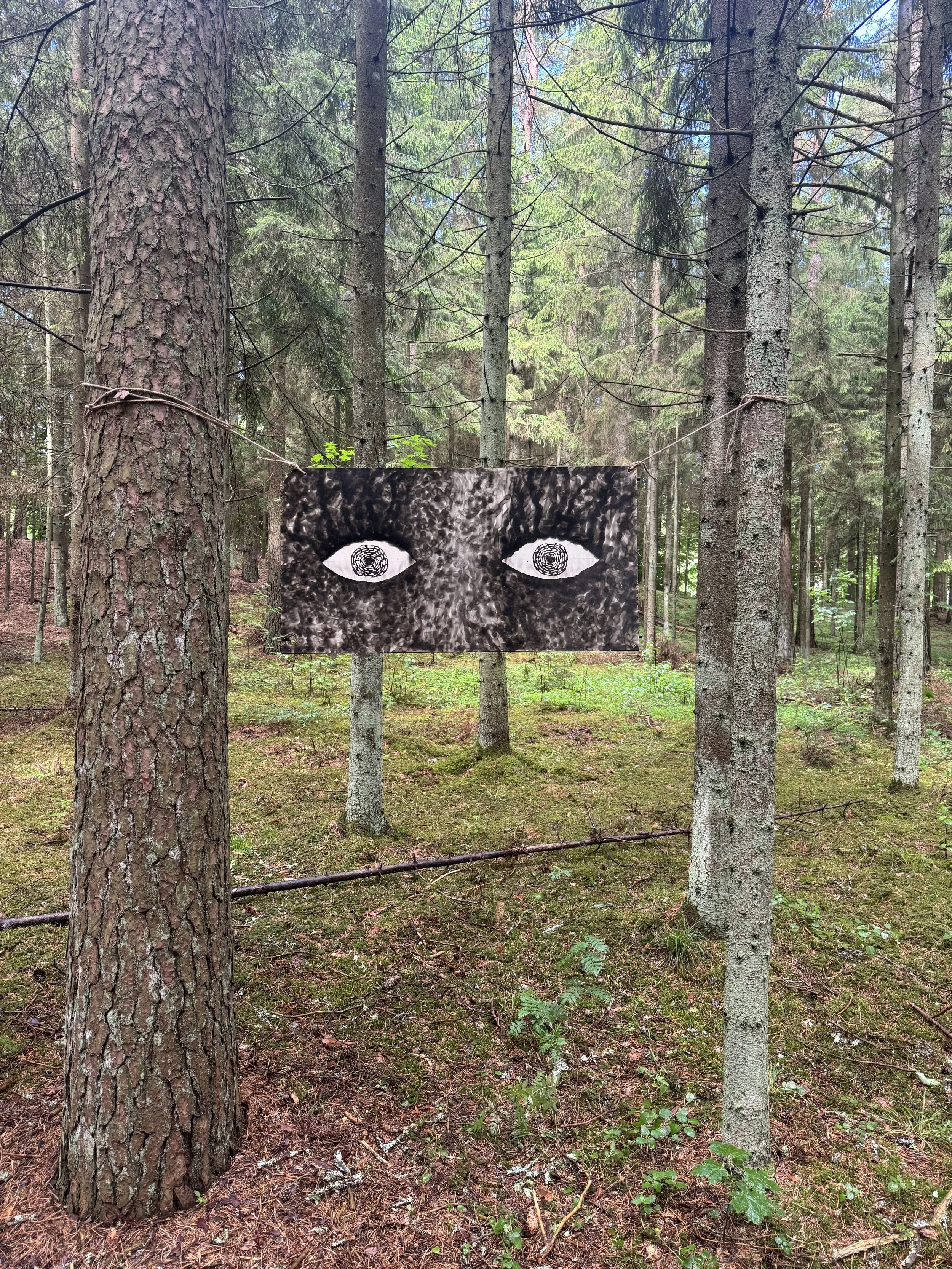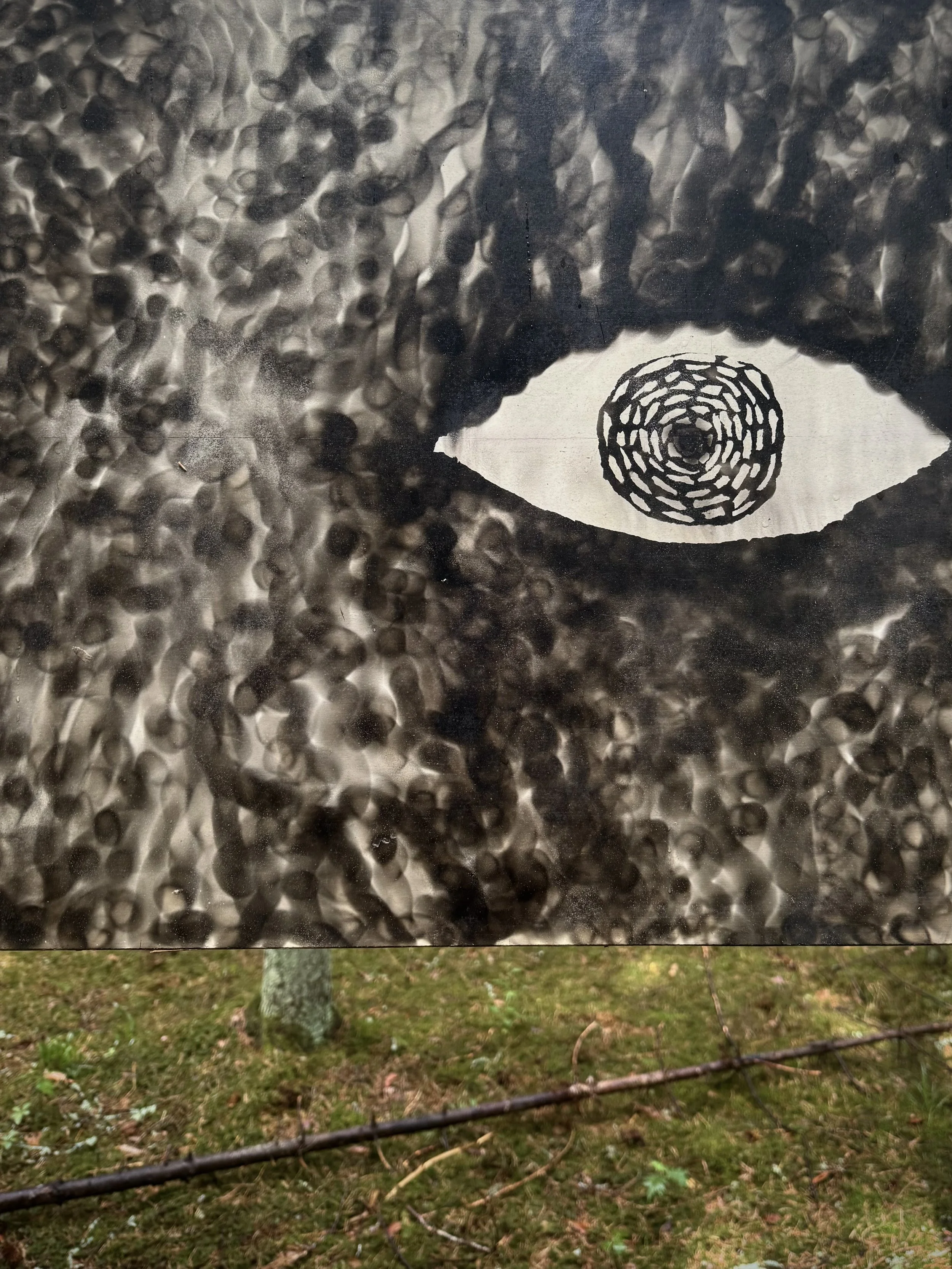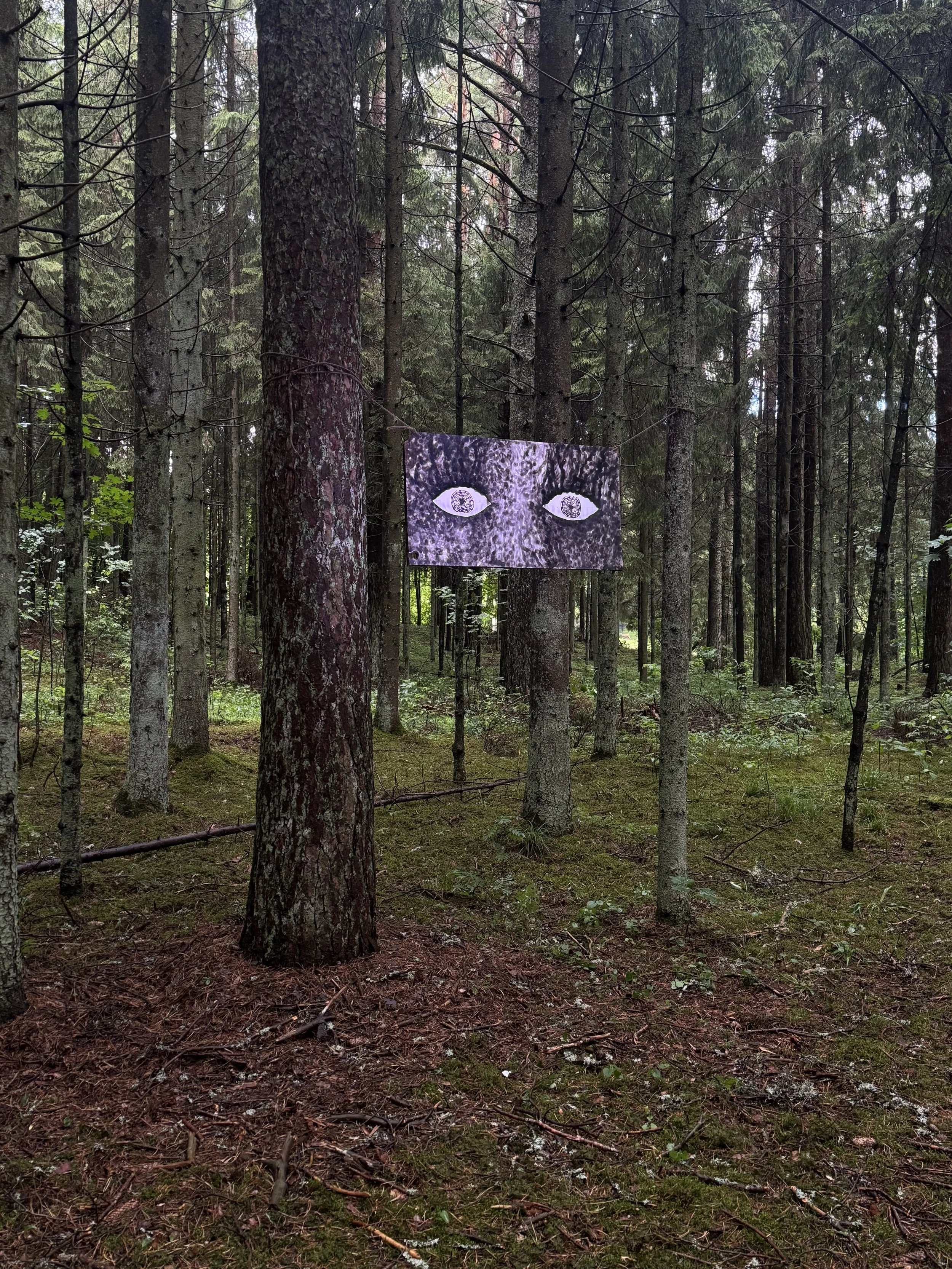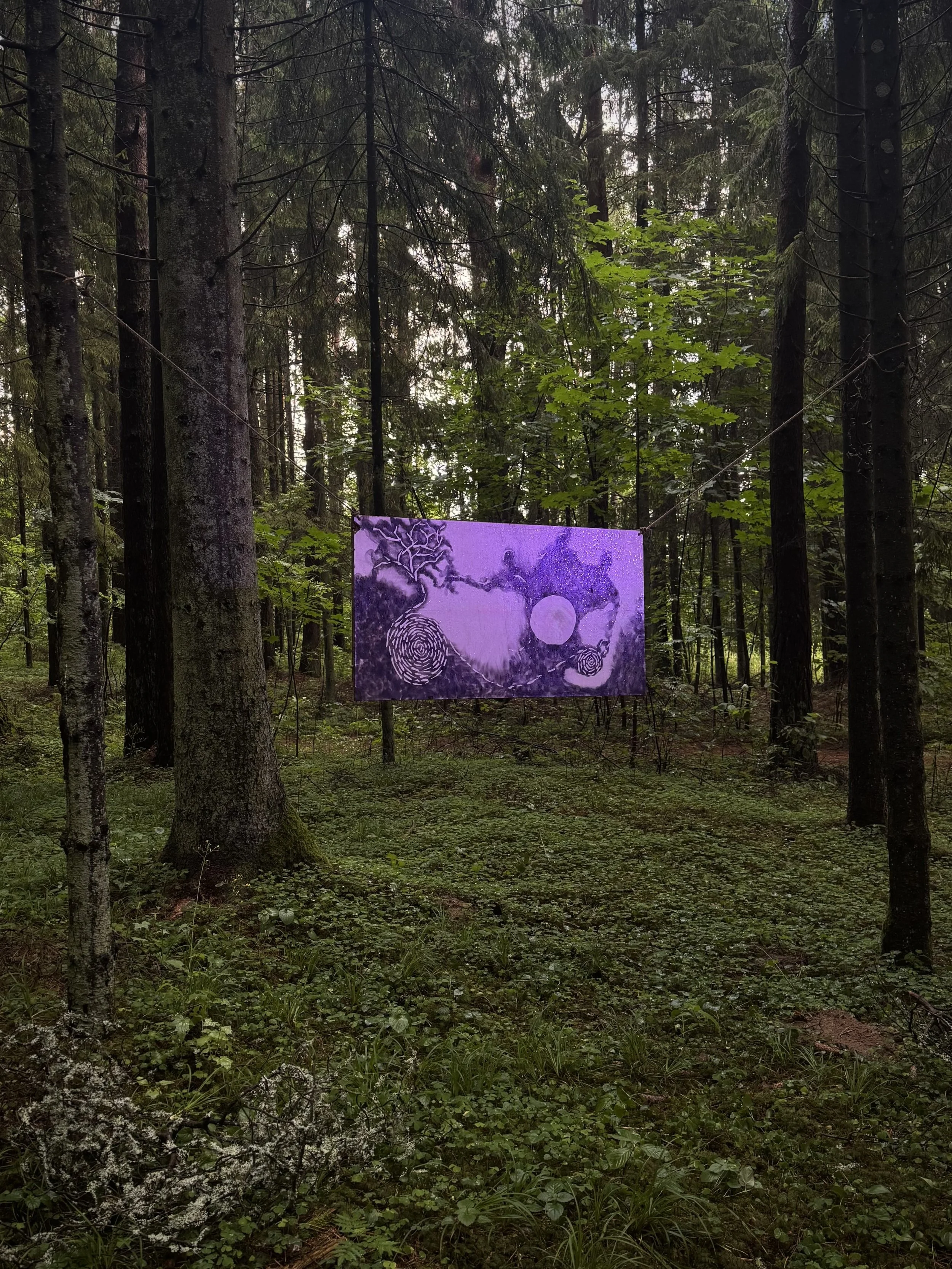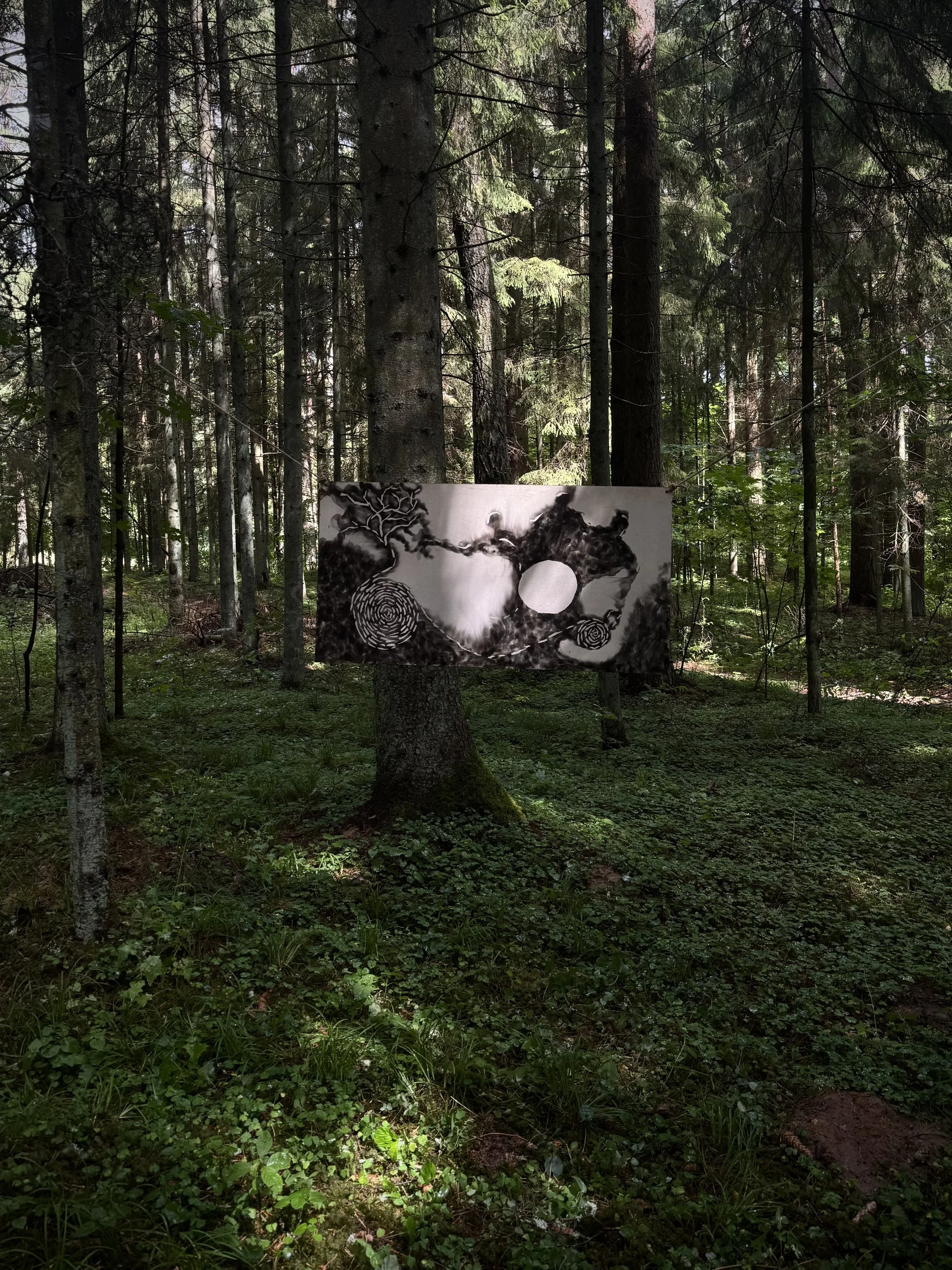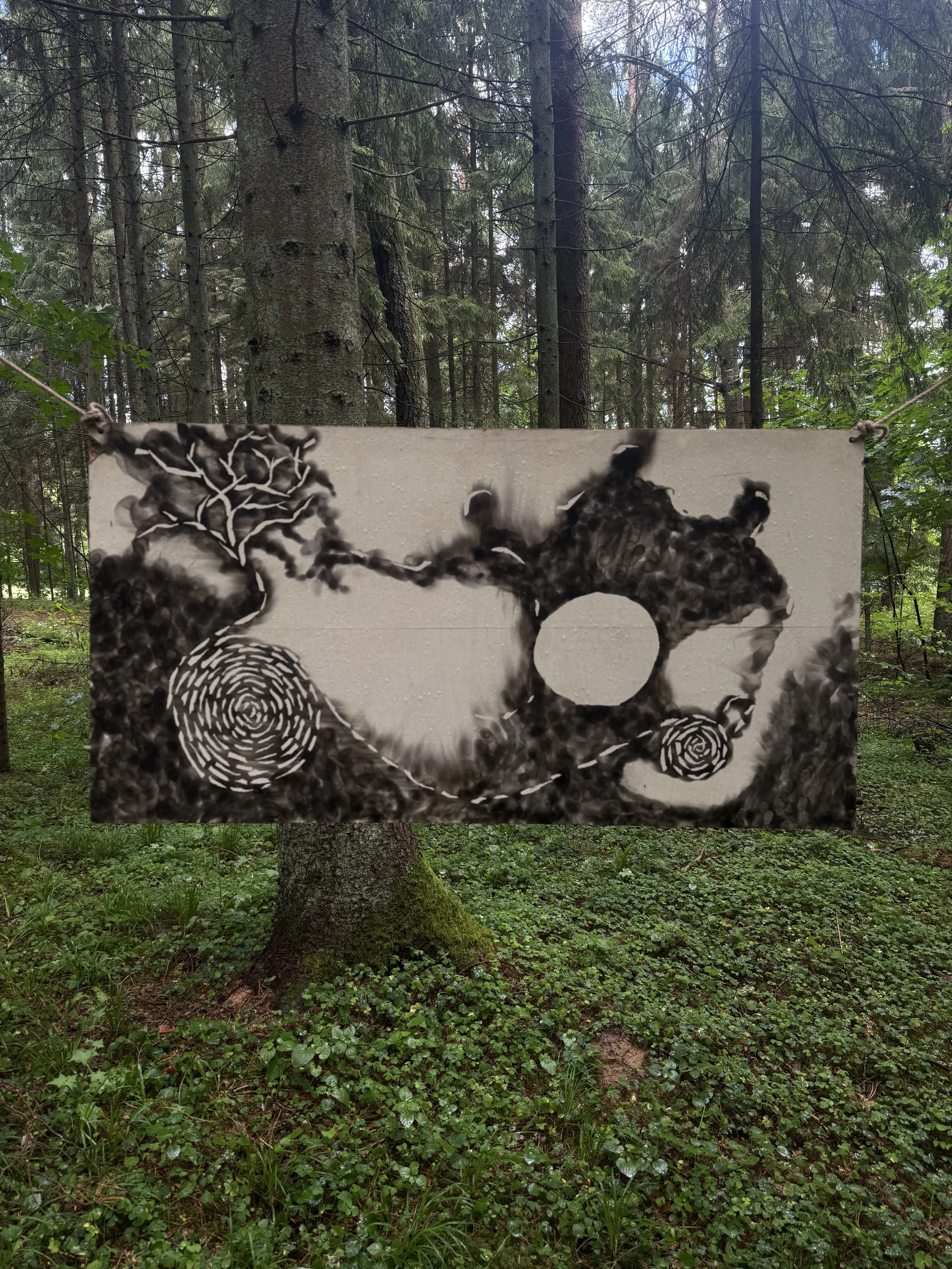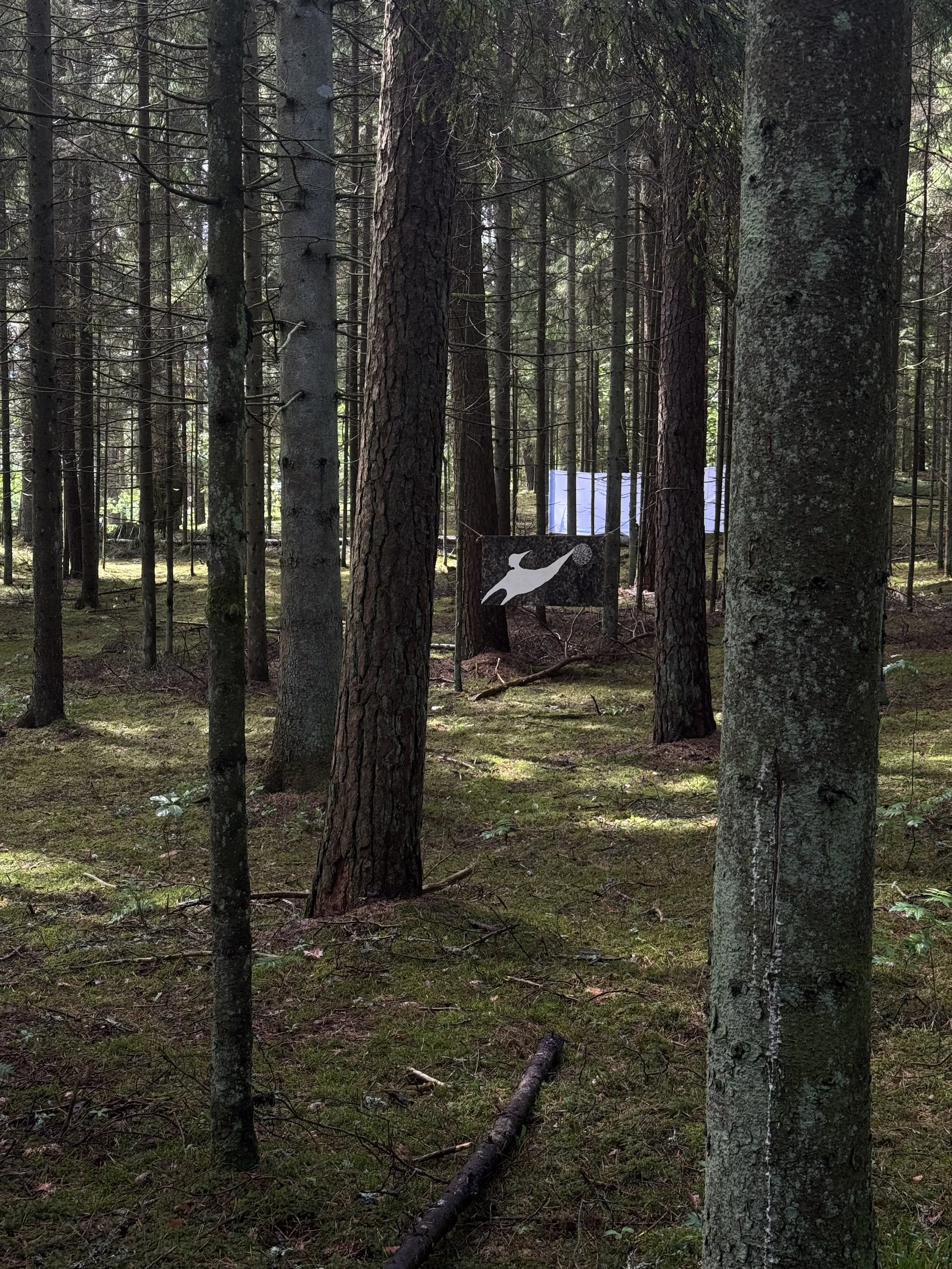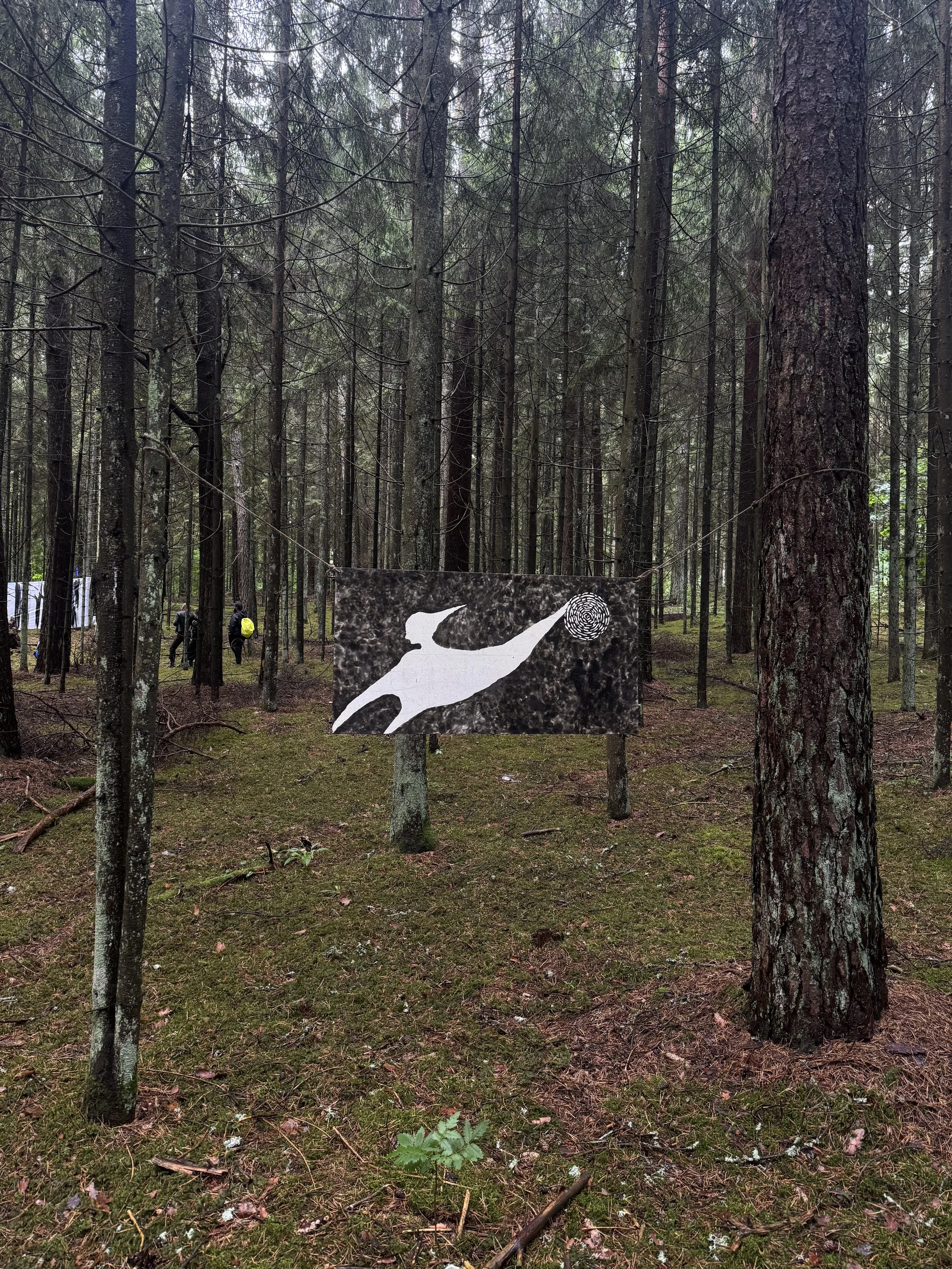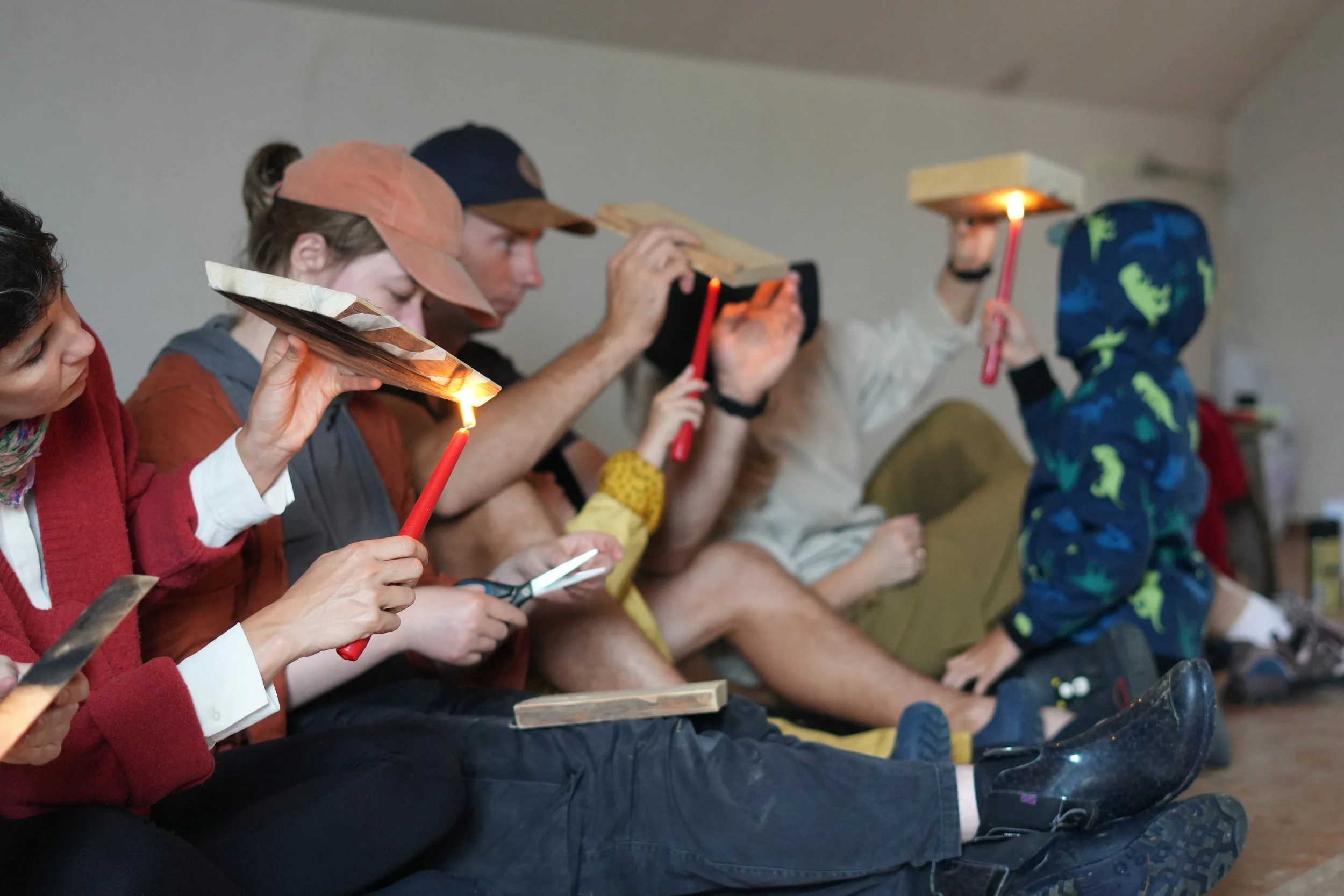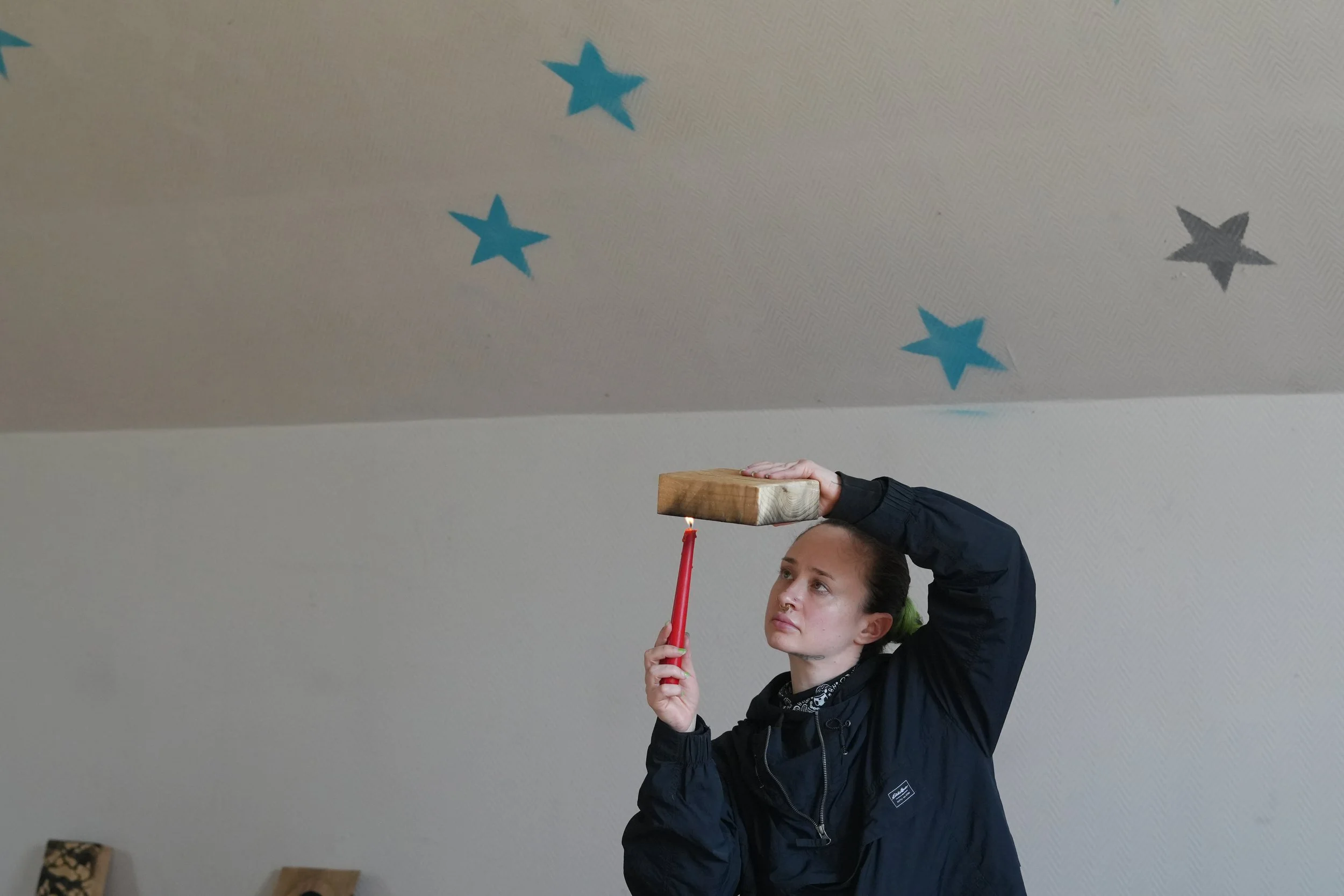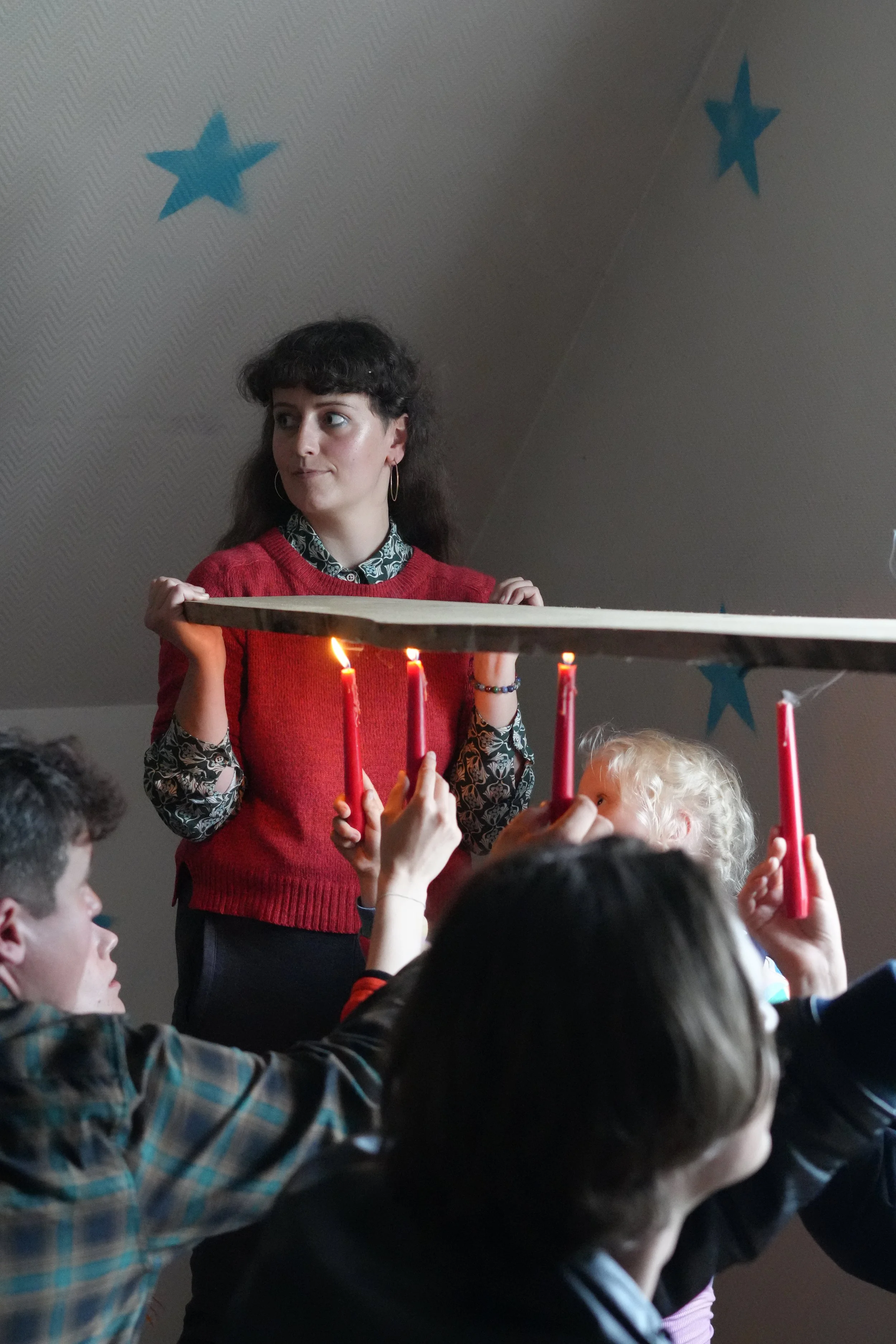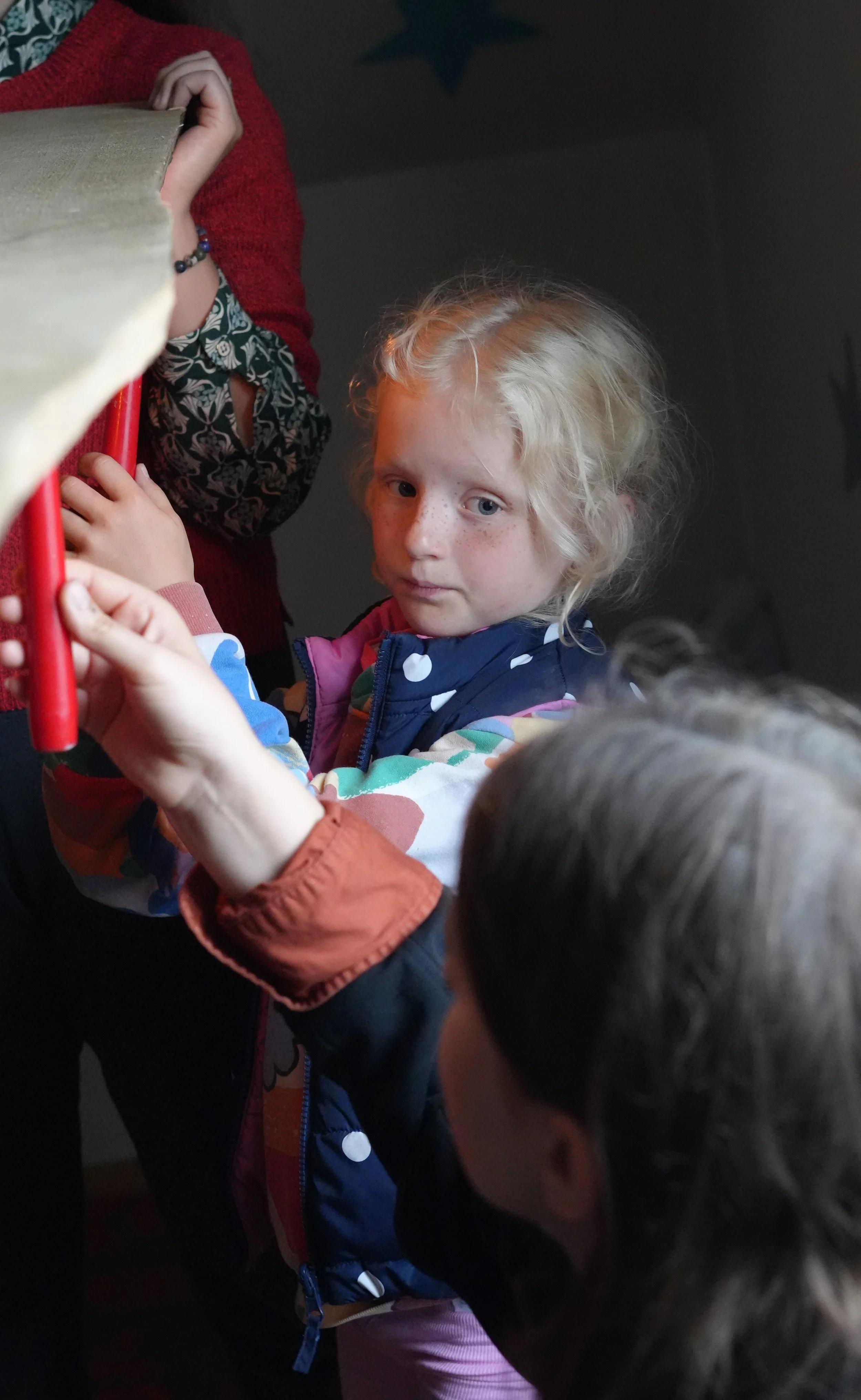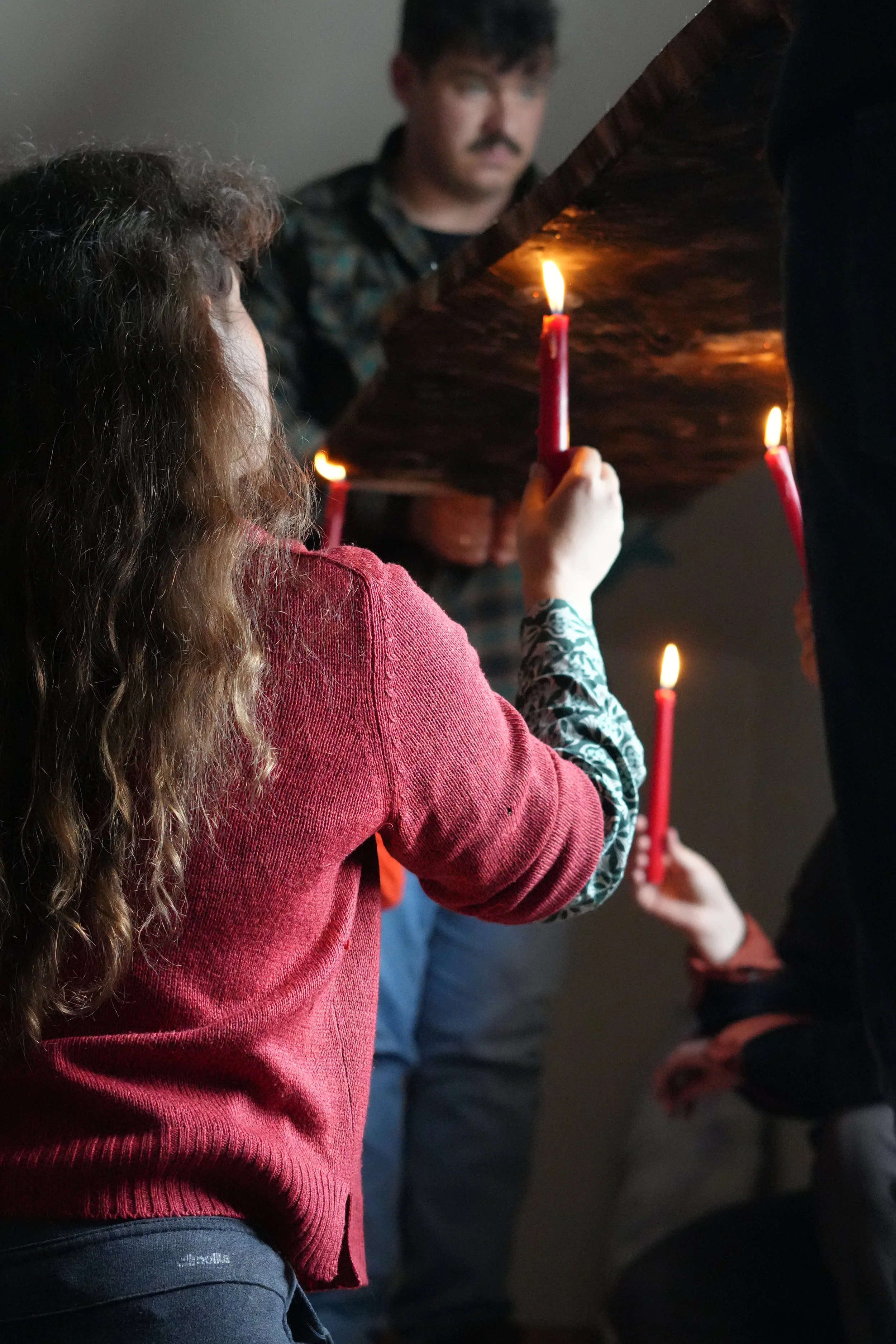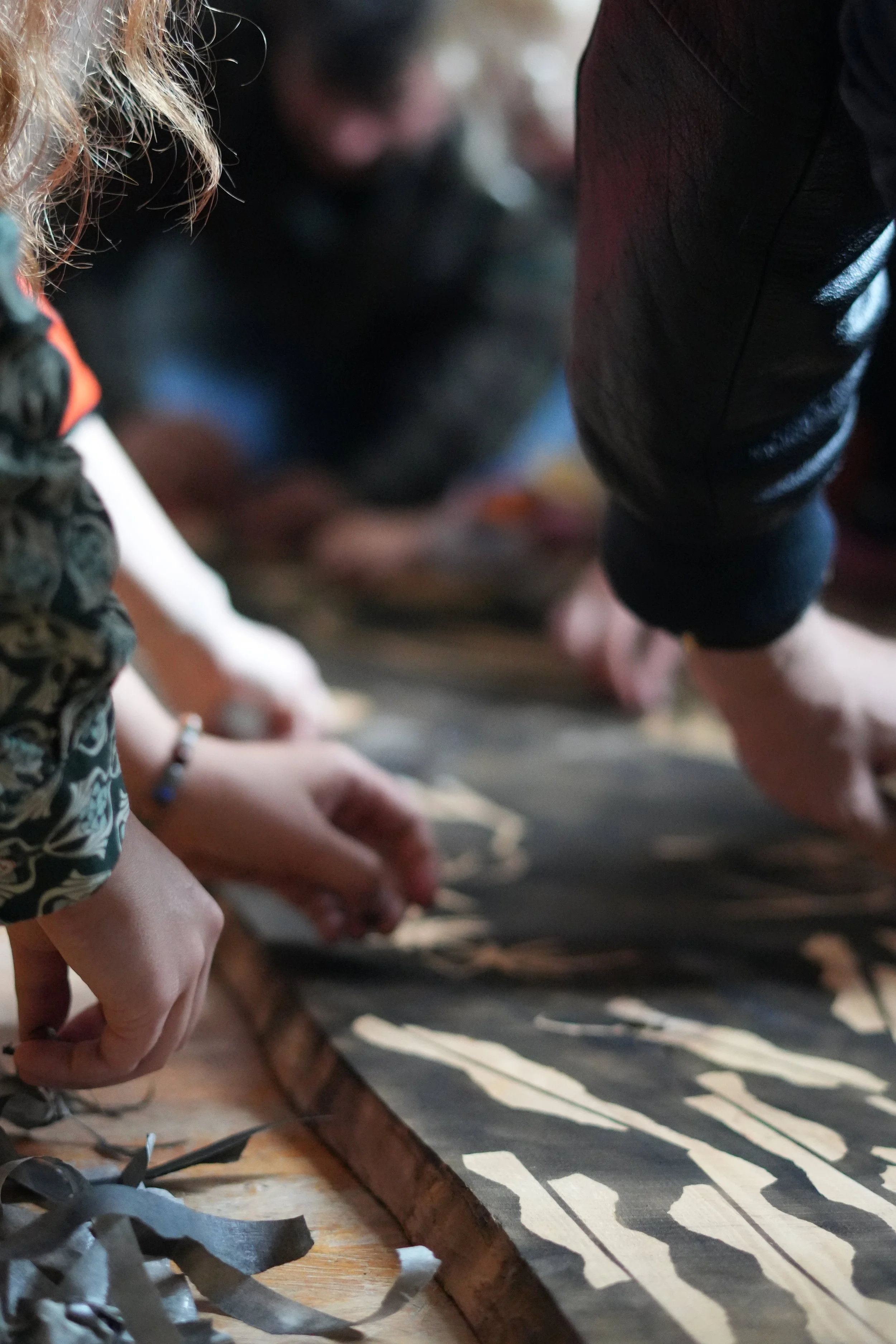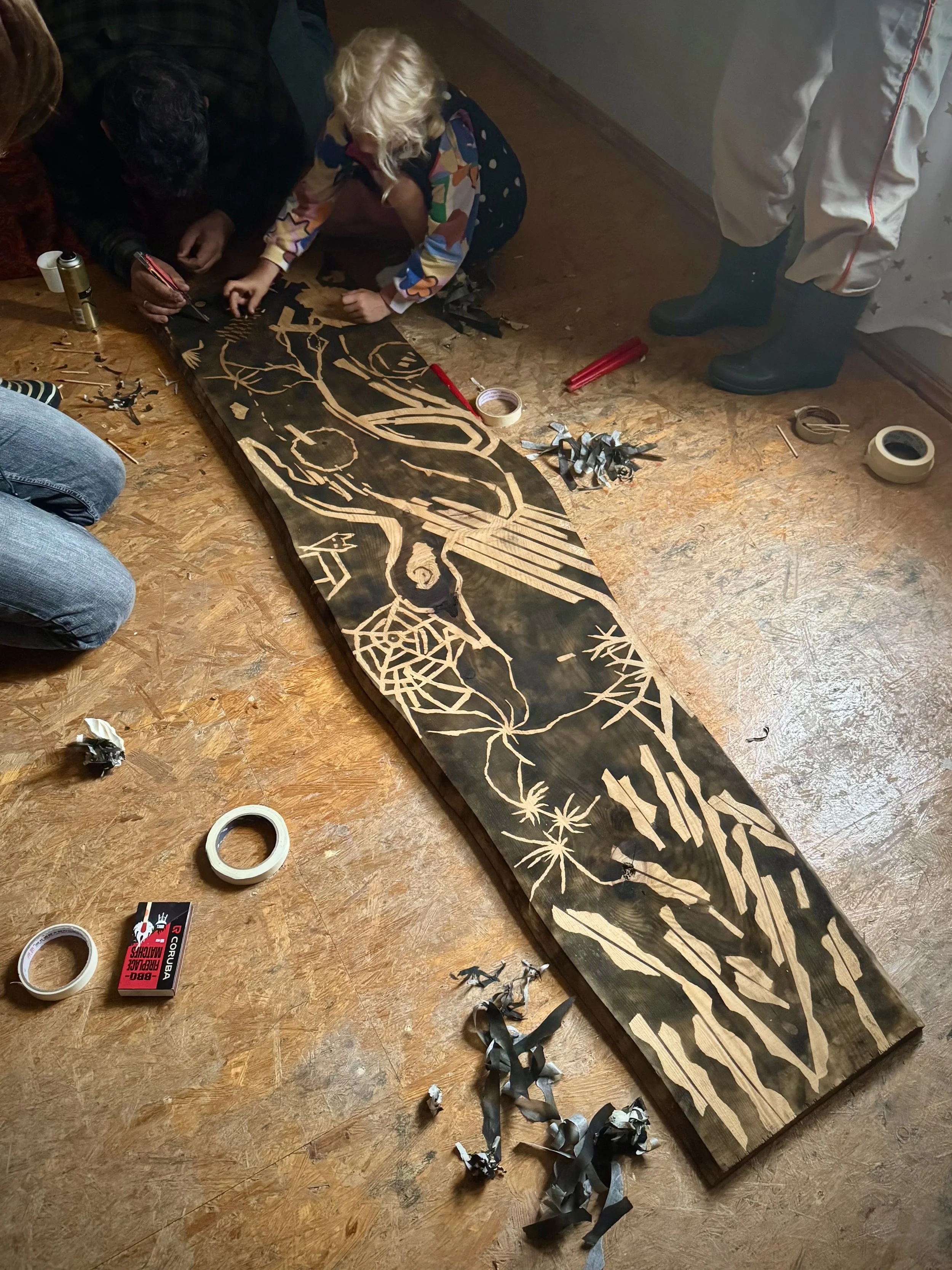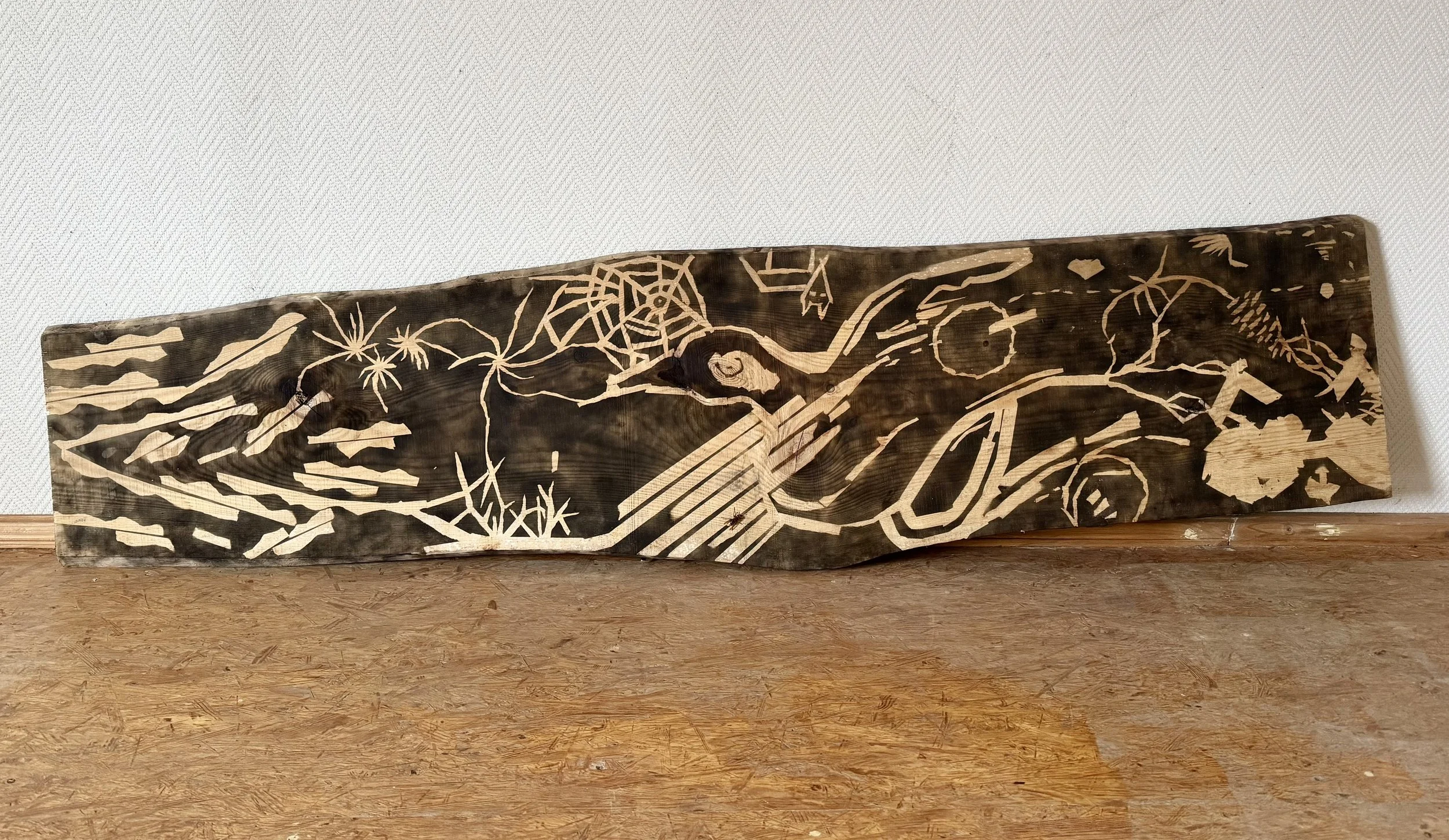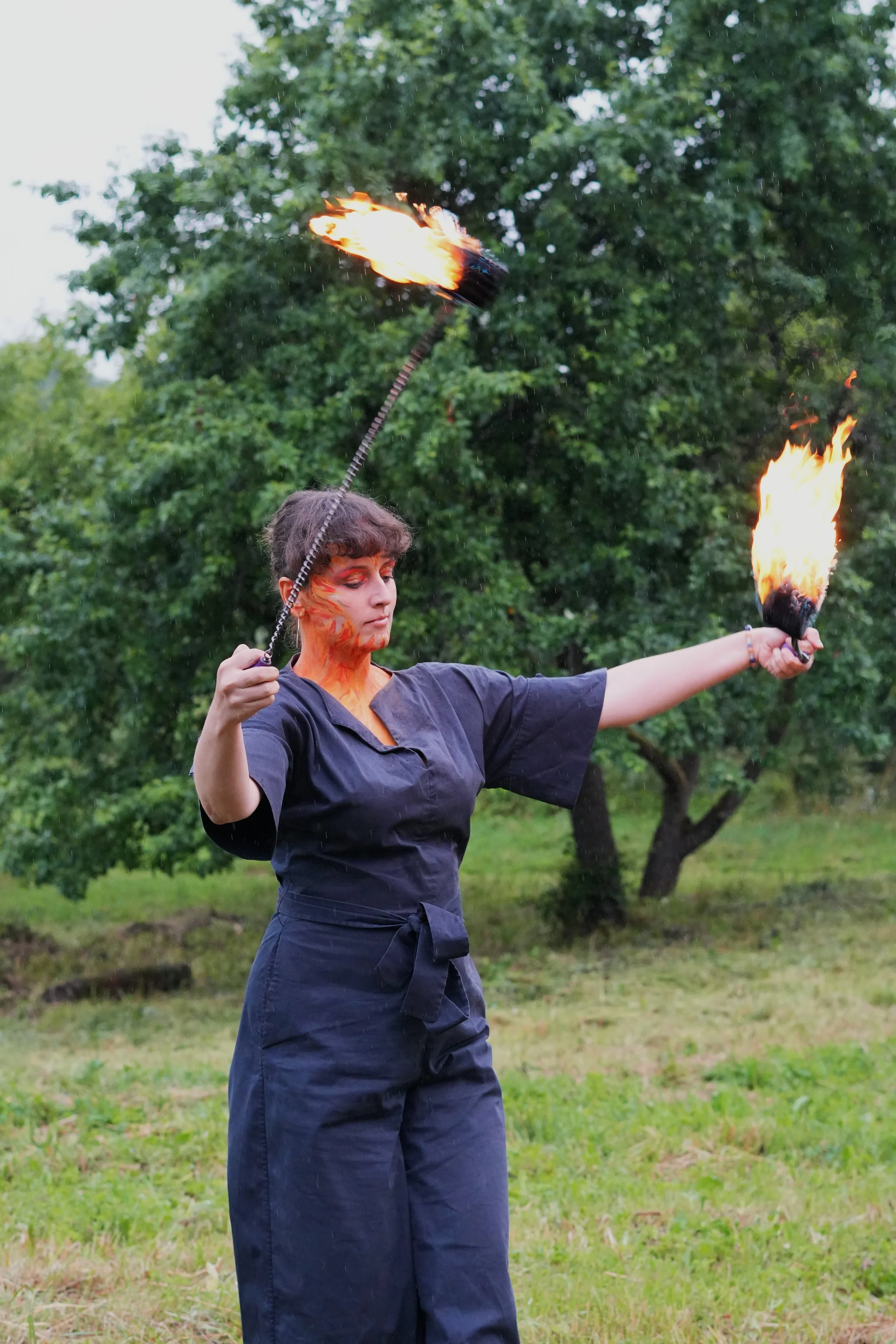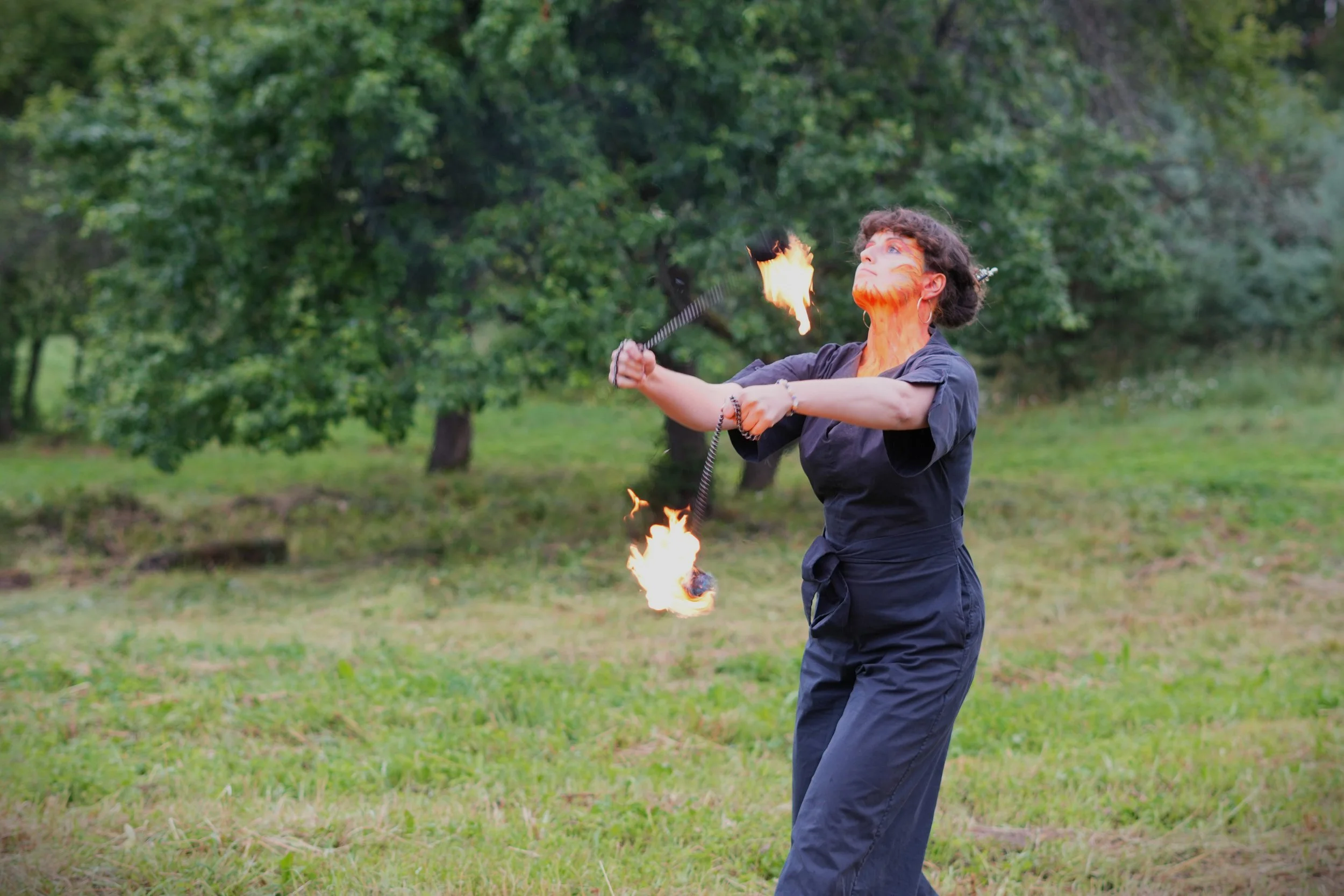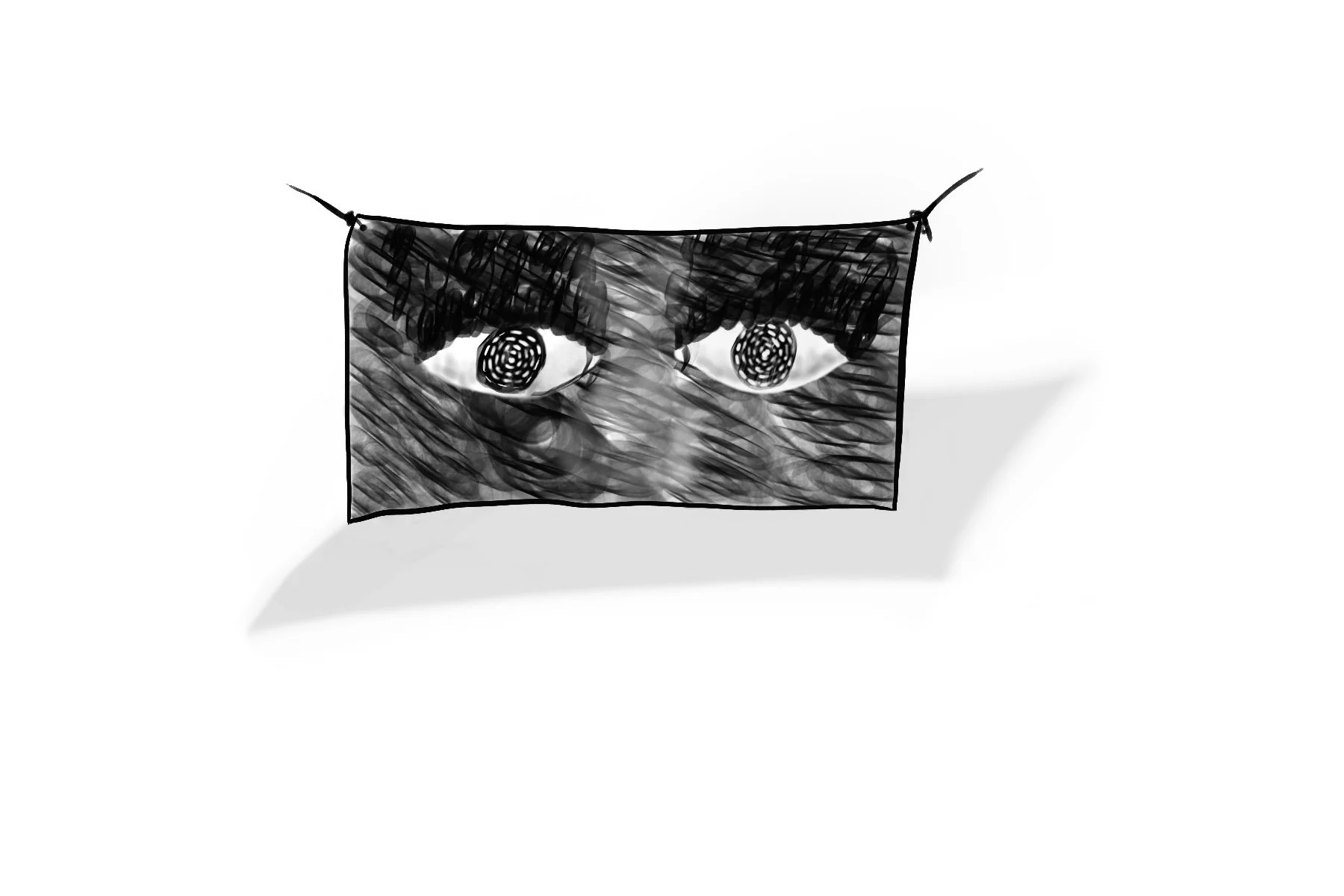
Series ‘Fire Eating, Species Unknown’, created at the artist residency Ubiškės3, in Ubiškė village, Telšiai district, Lithuania. Burnt plywood panels as site-responsive installation, performance, collective work. 2026.
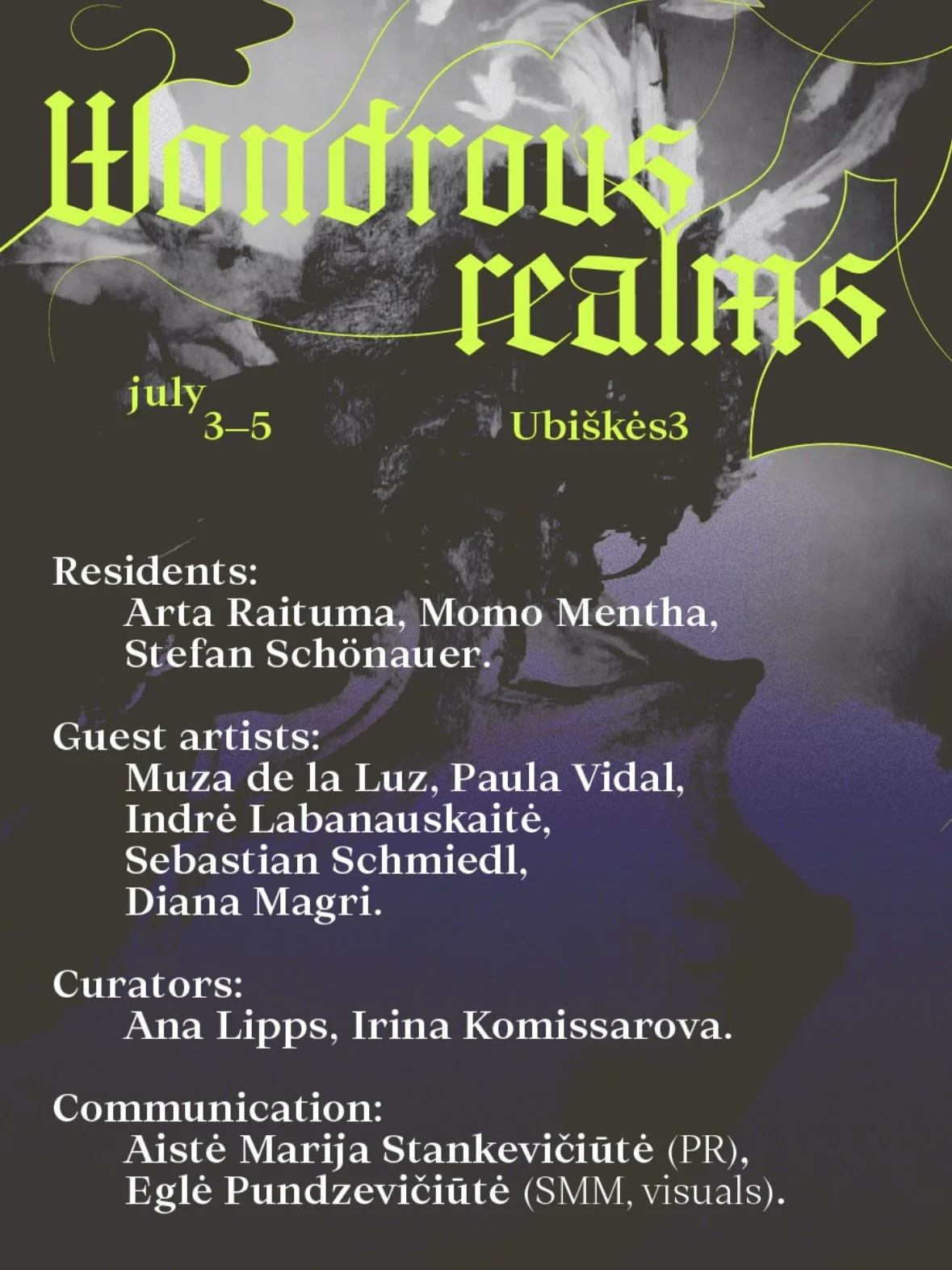
Installation works displayed in the residency forest as part of the contemporary art festival ‘Wondrous Realms’, July 3-5. Curated by Ana Lipps and Irina Komissarova.
Selected photos (personal archive, performance and collective work photos by Mohammed Lehry)
‘During residency Raituma explored fire as an entity, misunderstood and often misused, approaching it through its embodied and ‘otherness’ qualities. The work questions the place and meaning of beings and forces that exist outside clear categorisation, such as demons, spirits, elementals. Drawing from Žemaitija mythologies alongside contemporary imaginaries of ‘unknown entities’, the research approached these figures as abstract markers of the limits of human understanding of the non-human.
Materials found within the local ecosystem and considered unwanted or useless were repurposed through a new non-utilitary framework. Through a series of wooden panels ‘painted’ with fire and later returned to their ‘home’, the forest, as a levitating installation, the work followed a playful logic of three: sky, earth, underworld; triple deities; gray area between black and white; 3 residents of Ubiškės 3.
Arta’s residency activities also included exchange and cross-pollination of art practices, resulting in a collective work created with fire techniques, and a co-authorship performance work, being body-painted by artist Momo Mentha.’
Excerpt from the article published in ‘Echo Gone Wrong’ online magazine:
‘All participating artists identify with or feel an affinity toward figures such as witches, fairies, mermaids, or werewolves. These beings, commonly found in fairy tales, have long functioned as metaphors for otherness—representing people who fall outside dominant social norms. The residency invites artists to engage with these “monstrous” figures critically and examine how society constructs narratives about those considered “different.”
The festival program includes residency works, invited performances, experimental sound sessions, DJ sets, sound walks in the forest, workshops, informal gatherings, and shared time in nature. An open talk series with artists, curators, and cultural practitioners also take place.
The project is supported by the Telšiai Municipality, the Lithuanian Council for Culture, and the Ubiškė Multipurpose Center.’